
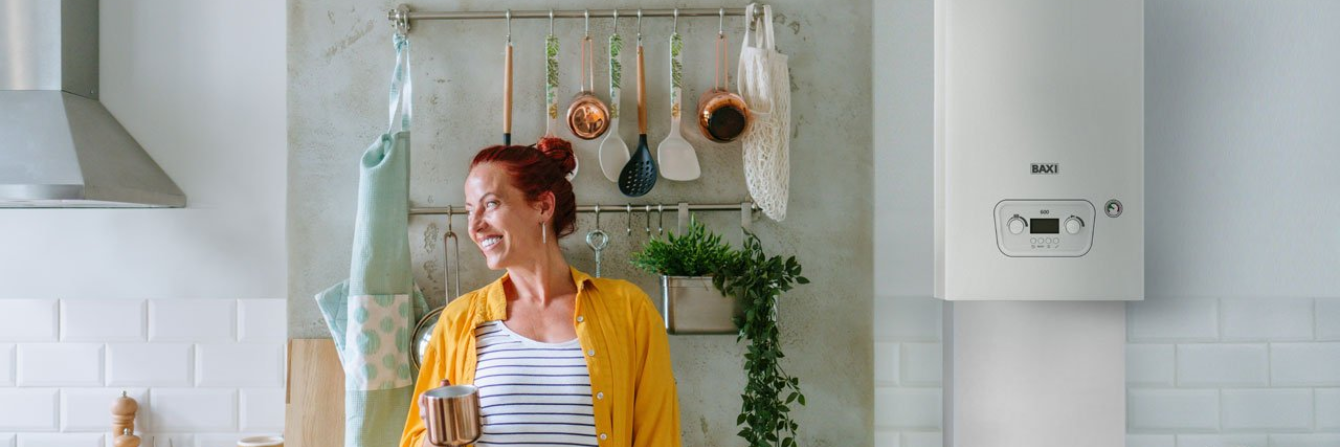
Replacing your boiler probably isn’t at the top of your list of exciting home improvements. A new kitchen? Lovely. A stylish bathroom? Absolutely. A shiny new boiler tucked away in a cupboard? Not quite the same thrill.
But when your old boiler starts making noises like a tractor struggling up a hill, or your heating bills seem to be climbing faster than your wages, it might be time to consider a replacement.
Unfortunately, there’s a surprising amount of misinformation floating around about boilers. From the idea that bigger is always better to the belief that replacing a boiler will cost a small fortune, these myths can leave homeowners confused and potentially out of pocket.
At Leeva Plumbing & Heating, we help homeowners across Ripley, Belper, Alfreton and the surrounding areas make informed decisions about their heating. So, before you start searching for a new boiler in Derbyshire, let’s separate the facts from the fiction.
Myth 1: All Boilers Are Basically the Same
Verdict: Definitely a myth!
Saying all boilers are the same is a bit like saying all cars are the same because they have four wheels and an engine.
Different boilers suit different properties, households and heating requirements.
The three main types you’ll encounter are:
- Combi boilers: Heat water directly from the mains when you need it, without requiring a separate hot water cylinder. They’re particularly popular in smaller homes.
- System boilers: Work with a separate hot water cylinder, making them a useful option for homes with higher hot water demands.
- Regular boilers: Often found in older properties with traditional heating systems, using a hot water cylinder and usually separate cold water storage.
Even within these categories, boilers differ in output, efficiency, controls, warranties and features.
A compact two-bedroom terrace is unlikely to have the same heating requirements as a large detached house with three bathrooms and a teenager who considers a 45-minute shower perfectly reasonable.
Our advice: Before committing to a boiler replacement, have a qualified heating engineer assess your property, existing heating system and hot water requirements.
Myth 2: Replacing Your Boiler Is Always Incredibly Expensive
Verdict: Not necessarily.
Nobody is suggesting a new boiler costs the same as a takeaway pizza. But boiler replacement isn’t automatically the financial disaster some homeowners imagine.
The final cost depends on several factors, including:
- The type, brand and model of boiler you choose.
- Whether you’re replacing an existing boiler with a similar system.
- Whether the boiler needs relocating.
- Any changes required to pipework, flues or controls.
- The condition of your existing heating system.
For example, replacing an existing combi boiler with a suitable modern combi in the same location is generally more straightforward than converting an older conventional heating system to a combi.
It’s also important to consider the long-term picture. An inefficient or unreliable boiler could be costing you money through higher energy consumption and repeated repairs.
A new, correctly specified boiler may reduce running costs, particularly if your existing system is old and inefficient.
However, the savings will depend on your current boiler, energy usage, heating controls and household habits.
Our advice: Get a detailed quotation explaining exactly what’s included. The cheapest initial price isn’t necessarily the best long-term value.
Myth 3: If Your Boiler Still Works, There’s No Reason to Replace It
Verdict: Only partly true.
If your boiler is working safely, efficiently and reliably, there’s no need to rush out and replace it simply because it’s getting older.
But there’s a difference between working and working well.
Think of that ancient fridge humming away in the kitchen. It might still keep the milk cold, but it could be using considerably more electricity than a modern equivalent.
The same principle can apply to boilers.
Older boilers may be less efficient than modern condensing models, particularly if they lack effective heating controls. As components age, breakdowns can also become more frequent and replacement parts may become harder to obtain.
Signs that your boiler deserves closer attention include:
- Increasingly frequent breakdowns.
- Rising heating bills without an obvious explanation.
- Unusual noises from the boiler or heating system.
- Difficulty maintaining a comfortable temperature.
- Repairs becoming increasingly expensive.
Of course, these symptoms don’t automatically mean you need a new boiler. Some problems can be resolved through servicing or repairs.
Our advice: If your boiler is approaching 15 years old, or is becoming increasingly unreliable, ask a heating engineer whether repairing or replacing it makes better financial sense.
Myth 4: A Bigger Boiler Will Heat Your Home Better
Verdict: Bigger isn’t always better.
It’s tempting to think that buying the most powerful boiler available will guarantee a wonderfully warm home.
Unfortunately, boilers don’t work quite like that.
An oversized boiler can operate inefficiently, particularly if it repeatedly switches on and off because the property doesn’t require its full output. This is known as short cycling.
An undersized boiler, meanwhile, may struggle to meet your heating or hot water requirements.
The trick is choosing the correct output for your property.
Heating engineers consider factors such as property size, insulation, heat loss, radiators and hot water demand when recommending a boiler.
With combi boilers, the hot water flow rate is particularly important, especially in households where several people might want hot water at the same time.
Our advice: Don’t choose a boiler based solely on its kilowatt rating. A properly calculated heating requirement is far more useful than simply buying the biggest model in the brochure.
Myth 5: Modern Boilers Don’t Need Servicing
Verdict: Absolutely false!
A new boiler might have all the latest technology, clever controls and a reassuring manufacturer’s warranty, but that doesn’t make it maintenance-free.
Even modern boilers need regular attention to help keep them operating safely and efficiently.
An annual service can help identify developing problems before they become expensive breakdowns.
It also gives your heating engineer an opportunity to check important components and ensure the boiler is operating correctly.
Many manufacturers require annual servicing as a condition of maintaining their warranties, so skipping a service could prove particularly expensive if something goes wrong.
According to the Gas Safe Register, gas appliances should be regularly serviced and maintained by a suitably qualified Gas Safe registered engineer.
Our advice: Arrange annual boiler servicing, even when everything appears to be working perfectly. Your boiler might not thank you personally, but your bank balance could.
Myth 6: A New Boiler Will Automatically Cut Your Energy Bills in Half
Verdict: Sadly, no.
Wouldn’t that be wonderful?
Unfortunately, replacing your boiler doesn’t come with a magical 50% discount on your gas bill.
Modern condensing boilers are generally more efficient than older non-condensing models, meaning they can use less fuel to produce the same amount of useful heat.
However, actual savings depend on several factors:
- The efficiency of your existing boiler.
- Your home’s insulation.
- How much heating and hot water you use.
- Your thermostat settings and heating schedule.
- Whether your radiators and heating controls are working effectively.
The Energy Saving Trust’s boiler guidance explains how boiler efficiency and suitable heating controls can affect household energy consumption.
If your existing boiler is already a relatively modern condensing model, the potential savings from replacing it may be smaller than you’d expect.
On the other hand, replacing a much older, inefficient system could deliver more noticeable improvements.
Our advice: Be cautious of anyone promising enormous savings without first understanding your current heating system and energy usage.
Myth 7: Boiler Replacement Means Days of Disruption
Verdict: Usually not.
Some homeowners put off replacing their boiler because they imagine several days of chaos, floorboards being lifted and the entire house resembling a building site.
Fortunately, many straightforward boiler replacements are much less disruptive.
If you’re replacing a boiler with a similar model in the same location, installation can often be completed within a day, although some jobs take longer.
More complicated installations, such as relocating a boiler or converting from a regular boiler to a combi system, may require additional time.
Your installer should explain the expected timescale before work begins.
There may be a temporary interruption to your heating and hot water, but an experienced installation team will aim to keep disruption to a minimum.
Our advice: Ask your boiler installer how long the work is likely to take, what preparation is needed and whether any additional plumbing work is anticipated.
Myth 8: You Can Install a Gas Boiler Yourself and Save Money
Verdict: Absolutely not!
There are plenty of DIY jobs around the house worth tackling.
Painting a bedroom? Go for it.
Putting up shelves? Absolutely, provided you’ve found the spirit level.
Installing your own gas boiler after watching a few online tutorials? Definitely not.
Gas boiler installation involves potentially dangerous work that must be carried out by someone with the appropriate qualifications and legal authorisation.
In the UK, anyone carrying out gas work as part of their business must be registered with the Gas Safe Register and qualified for the specific work involved.
Incorrect installation can create serious risks, including gas leaks, fires and carbon monoxide poisoning.
You can check an engineer’s registration and qualifications through the Gas Safe Register website.
Our advice: Always use a suitably qualified Gas Safe registered engineer for gas boiler installation, servicing and repairs.
Myth 9: Smart Thermostats Are Just Expensive Gadgets
Verdict: Not quite.
Smart thermostats sometimes get dismissed as unnecessary technology for people who enjoy controlling everything from their phones.
And yes, being able to turn the heating on from the sofa without moving is rather convenient.
But modern heating controls can offer genuine practical benefits.
Depending on the system, they may allow you to:
- Set different heating schedules throughout the week.
- Adjust temperatures remotely.
- Monitor heating usage.
- Reduce unnecessary heating when you’re away.
- Control different heating zones independently.
Some systems can also communicate with compatible boilers to adjust their output more efficiently.
However, not every smart thermostat works with every boiler, and the benefits depend on how the controls are used.
Our advice: When considering a boiler replacement, ask which heating controls are compatible with your new system and whether upgrading them would be worthwhile.
Myth 10: The Cheapest Boiler Quote Is Always the Best Deal
Verdict: Think again.
Everyone likes saving money, but boiler installation isn’t an area where price should be the only consideration.
Two quotations might look similar at first glance but include very different levels of work and equipment.
One installer might include a system clean, suitable heating controls, a magnetic filter and full commissioning, while another might charge extra for some of these items.
The boiler’s warranty, the installer’s experience and the quality of aftercare are also important.
Before choosing between quotes, ask:
- What boiler make and model is being installed?
- What warranty is included, and what are its conditions?
- Will the existing heating system be assessed and cleaned appropriately?
- Are heating controls included?
- Will the installation be properly commissioned and registered?
- What happens if there’s a problem after installation?
A slightly higher quotation may offer better value if it includes important work that another installer has left out.
Our advice: Compare what’s included rather than focusing solely on the figure at the bottom of the page.
So, When Is the Right Time to Replace Your Boiler?
There’s no single age at which every boiler suddenly needs replacing.
Some boilers continue operating reliably well beyond 15 years, while others may develop expensive problems much earlier.
Rather than focusing on age alone, consider the overall condition of your heating system.
If your boiler is regularly breaking down, struggling to heat your home or becoming increasingly expensive to repair, it may be time to explore replacement options.
And if you’re planning a major home renovation, extension or bathroom refurbishment, it’s worth checking whether your existing boiler will be suitable for the property’s future requirements.
The important thing is to make an informed decision rather than waiting until the boiler gives up completely on the coldest morning of the year.
Because, naturally, that’s when boilers seem to develop their most dramatic personalities.
Looking for a New Boiler in Derbyshire?
If you’re considering a boiler replacement, the team at Leeva Plumbing & Heating can help you understand your options and choose a heating system that’s suitable for your home and budget.
As experienced boiler installers in Derbyshire, we provide professional boiler installation and heating services for homeowners across Ripley, Belper, Alfreton and the surrounding areas.
Whether your existing boiler has reached the end of its useful life, you’re looking to improve energy efficiency or simply want some straightforward advice, we’re here to help.
Contact Leeva Plumbing & Heating today to discuss your new boiler in Derbyshire and arrange a quotation.
No confusing jargon, no unnecessary technical waffle. Just practical advice to help keep your home warm and your hot water flowing.
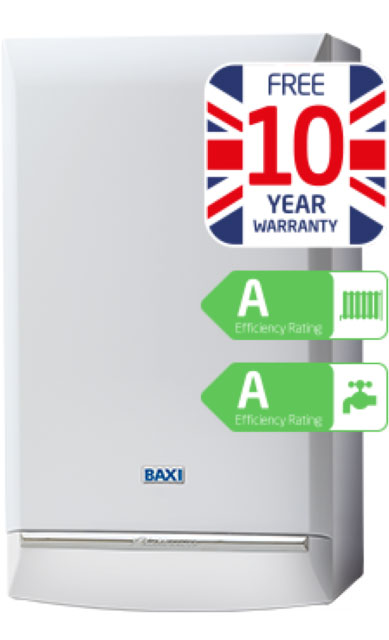 Fully Installed Baxi Boiler