

If you’ve ever lived in the UK, you’ll know the boiler isn’t just an appliance, it’s practically a household member. We don’t casually have a boiler… we rely on it. We argue with it. We panic when it makes a new noise. We treat the first cold snap like a national emergency.
And compared to a lot of countries, our “boiler culture” really is different. Here’s why.
1) Our climate: not extreme… just relentless
The UK rarely does “deep freeze for months” like parts of North America or Scandinavia. Instead, we do something far sneakier: a long, grey stretch of mild-but-chilly weather that seems to go on forever.
For example, in the East Midlands area, long-term Met Office climate averages around Sutton Bonington show an average January maximum temperature of about 7°C, and close to 48 days of air frost per year. That’s not Arctic, but it’s cold enough to keep heating firmly in your daily routine.
It’s the length of the heating season that builds the obsession:
- You might not need the heating on full blast…
- but you’ll need it often, and for months.
So the boiler becomes your comfort system. The difference between “cosy home” and “why can I see my breath in the kitchen?”
2) Our home styles: older housing + smaller spaces = boiler dependency
The UK has a huge variety of homes; terraces, semis, older stone properties, post-war builds, modern estates, and many were never designed with today’s heating expectations in mind.
The English Housing Survey shows the average usable floor area of homes is around 96m², and owner-occupied homes are commonly semi-detached (30%) or detached (26%).
In plain English: lots of British homes are compact, with tighter cupboards, smaller utility spaces, and layouts that make “big heating plant” impractical.
That’s one reason we’ve historically leaned towards individual boilers rather than the “whole street heats from one big system” approach you see more often in parts of Europe.
3) We’re a nation of combis (and we didn’t get here by accident)
If you’ve ever heard someone say, “I want a combi. No tanks, no fuss,” that’s British heating culture in one sentence.
Government survey data shows just how dominant combis have become:
- Back in 2001, only 10% of homes had a combination boiler
- By 2023, that rose to 19% (combi) plus 55% with condensing-combination boilers
So yes: the combi is basically the UK’s default boiler.
And it makes sense, because combis suit British life:
- No bulky hot water cylinder taking up an airing cupboard
- Hot water on demand (big win for showers and busy households)
- Great for homes where space is at a premium
Even consumer market data reflects it. Combis account for the majority of boiler sales in the UK.
4) The UK’s gas story is a huge part of why boilers “won”
Britain’s boiler love affair wasn’t just about preference, it was powered by infrastructure.
A massive turning point was the national switch from “town gas” (manufactured from coal) to natural gas after North Sea discoveries. The UK government describes how 13 million homes and 35 million appliances were converted, mostly between 1967–1977, in what’s often remembered as one of the biggest post-war engineering programmes.
That switch didn’t just modernise heating, it normalised gas as the everyday fuel for warmth.
Fast forward, and gas is still the heavyweight:
- In 2023-24, around 2 million households (86%) used a gas-fired main heating system.
- There are estimates of roughly 23 million UK homes heated by natural gas boilers.
When that many households run on boilers, it’s no surprise we talk about them like they’re essential infrastructure… because they are.
5) “Why don’t we do district heating like other countries?”
Some countries (especially in Northern and Eastern Europe) use much more district heating, where heat is generated centrally and piped to homes.
In the UK, heat networks are still relatively small scale:
- Energy UK notes heat networks serve around 446,517 homes (and around 480,000 total customers) and meet roughly 2% of total UK heat demand.
- The Energy Saving Trust also puts it at just over 2% of UK homes
So while heat networks are growing, most British homes still rely on an individual boiler, hence the personal “boiler relationship”.
6) Why boiler servicing is more critical here
Because Britain is so boiler-heavy, servicing matters more. Not as a box-ticking exercise, but as basic household risk management.
Safety (the serious bit)
The HSE warns carbon monoxide can kill quickly, and notes that around 7 people a year die from CO poisoning linked to gas appliances/flues that haven’t been properly installed or maintained, or are poorly ventilated.
Legal responsibilities (especially for landlords)
UK guidance for private renting states landlords must have a Gas Safe registered engineer carry out an annual gas safety check on each appliance and flue they provide.
Reliability (the British winter panic factor)
When you consider how many homes depend on one box on the wall, a breakdown isn’t just inconvenient, it’s suddenly everyone’s wearing coats indoors.
Regular boiler servicing helps catch the common culprits before they become “no heating, no hot water” problems:
- pressure issues
- leaks starting to develop
- worn components
- inefficient burning
- faults that trigger lockouts at the worst possible time
And if you’re in an older Derbyshire property (Ripley, Belper, Alfreton and surrounding villages have plenty), preventative care can make all the difference.
Quick “Great British Boiler” facts (for the next time you’re making tea)
- The UK’s 1967-77 gas conversion involved tens of millions of appliance changes. Basically a national “swap the nozzle” operation.
- Condensing boilers became the standard through regulation in the mid-2000s, and the shift is considered a major energy-efficiency success story.
- Combi and condensing-combi boilers now dominate English homes compared to the early 2000s.
Need boiler servicing in Derbyshire?
If you’re due a check-up (or your boiler’s started doing that suspicious “I’m fine… probably” noise), Leeva Plumbing & Heating can help with boiler servicing in Ripley, Belper and Alfreton and across Derbyshire
A well-serviced boiler is safer, more reliable, and far less likely to choose the first cold Monday of the year to throw a tantrum.
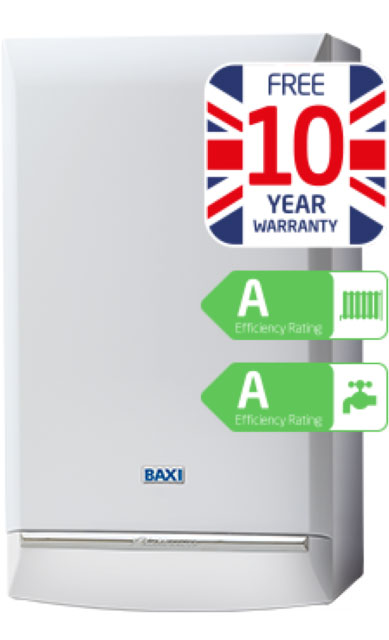 Fully Installed Baxi Boiler