
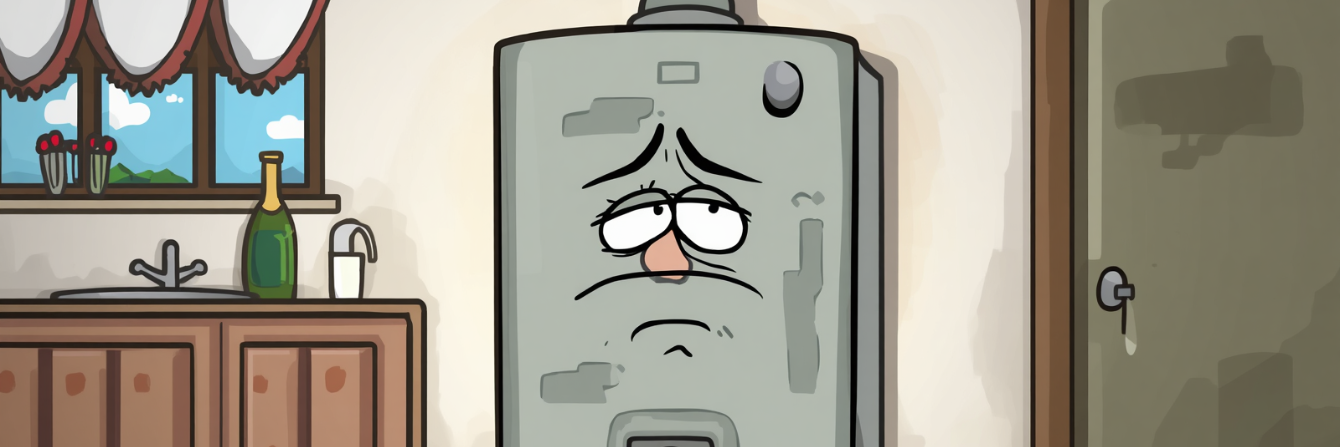
Boilers are a bit like cars. When they’re new, they run smoothly, respond quickly and don’t make strange noises in the middle of the night. As they get older, they may still keep going, but you start to notice the odd grumble, the occasional delay and the growing suspicion that something expensive is quietly plotting behind the casing.
So, how old is too old for a boiler?
The honest answer is: it depends. Some boilers are still doing a perfectly respectable job after 12 years. Others start behaving like a tired old kettle much earlier. Age alone doesn’t tell the whole story, but it does give you a useful clue about what might be coming next.
If you’re wondering whether to keep repairing your current boiler or start looking at energy-efficient boilers, this guide will help you understand what your boiler’s age says about its future.
The Average Boiler Lifespan
Most domestic boilers are expected to last around 10 to 15 years, depending on the model, installation quality, servicing history and how hard they have worked over the years.
Energy Saving Trust notes that “the average lifespan of a boiler is 10 to 15 years” in its home energy advice: https://energysavingtrust.org.uk/tips-to-improve-the-epc-rating-of-your-home/
Age UK offers similar practical advice, saying: “If your boiler is over 12 years old, you might want to think about replacing it.” You can read their guidance here: https://www.ageuk.org.uk/information-advice/money-legal/debt-savings/energy/looking-after-your-boiler/
That doesn’t mean your boiler needs to be dragged out of the house on its 12th birthday while everyone sings “For He’s a Jolly Good Boiler”. But it does mean that once a boiler reaches this sort of age, it is sensible to keep a closer eye on it.
Think of 10 years as the point where your boiler enters middle age. Think of 15 years as the point where it starts saying things like, “I don’t like these modern thermostats.”
Why Older Boilers Become Less Efficient
A boiler’s job is simple in theory: turn fuel into heat for your home and hot water. The more efficiently it does that, the less energy is wasted.
New boilers in the UK are usually condensing boilers, designed to recover more heat from the gases that would otherwise disappear through the flue. Planning Portal explains that new boilers in the UK are required to be condensing boilers and are “at least 90% energy efficient”: https://www.planningportal.co.uk/permission/common-projects/boilers-and-heating/sustainability/
Older boilers can be much less efficient. Planning Portal also states that older models can fall “as low as 60%” on the energy efficiency rating: https://www.planningportal.co.uk/permission/common-projects/boilers-and-heating/sustainability/
In simple terms, a 90% efficient boiler loses around 10% of the energy it uses. A 60% efficient boiler loses around 40%. That means more of your money is drifting away as wasted heat.
And sadly, unlike missing socks, wasted energy does not usually turn up later behind the radiator.
The Boiler Age Check Chart
This chart is a general guide rather than a fixed rule. A well-maintained 12-year-old boiler may perform better than a neglected 7-year-old one. But age does give you a useful starting point.
| Boiler Age | Likely Efficiency Picture | What It Usually Means |
| 0–5 years | Around 90%+ if modern and well set up | Young, efficient and usually reliable. Keep up with annual servicing. |
| 6–10 years | Often still strong, but controls and servicing matter | Still plenty of life possible, but small issues can begin to appear. |
| 11–15 years | Efficiency may start to fall, especially on older models | Time to compare repair costs against replacement benefits. |
| 16–20 years | Often noticeably less efficient than modern boilers | More breakdown risk, older parts and higher running costs. |
| 20+ years | Could be significantly inefficient, especially non-condensing models | Replacement is often worth serious consideration. |
The key phrase here is “well set up”. Even a modern boiler needs the right controls, correct installation, clean system water and regular servicing to perform at its best.
Signs Your Boiler Is Getting Past Its Best
Your boiler will not usually send you a polite resignation letter. Instead, it drops hints. Sometimes subtle ones. Sometimes freezing-cold-shower-at-6am ones.
Here are a few signs that your boiler may be reaching the end of its useful life:
1. Repairs are becoming more frequent
One repair is normal. Two in a short space of time is irritating. Three starts to feel like your boiler has joined a subscription service for stress.
If you are calling an engineer every winter, it may be time to ask whether that money would be better put towards a replacement.
2. Parts are becoming harder to source
As boilers get older, replacement parts can become harder to find. This can make repairs slower, more expensive or, in some cases, not worthwhile.
3. Your heating takes longer to warm up
If the radiators are taking longer than they used to, the issue could be the boiler, the pump, sludge in the system, poor circulation or old controls. It does not automatically mean the boiler is finished, but it is worth investigating.
4. Your energy bills keep creeping up
Energy prices play a big role, of course. But if your usage has not changed and the boiler is old, poor efficiency could be part of the problem.
Energy Saving Trust says that upgrading a G-rated boiler to an A-rated boiler with full heating controls could save £420 a year in Great Britain: https://energysavingtrust.org.uk/energy-at-home/heating-your-home/
Actual savings depend on your home, current boiler, insulation, usage and heating controls, but it shows why an inefficient boiler can be expensive to keep.
5. The boiler is making odd noises
Banging, gurgling, whistling or kettling noises can point to circulation problems, trapped air, limescale, sludge or component wear.
A boiler should not sound like it is rehearsing for a percussion solo.
6. Your hot water is unreliable
If your shower keeps switching between “Arctic lake” and “volcanic soup”, it could be a sign your boiler is struggling to regulate hot water properly.
7. It is no longer compatible with modern controls
Modern heating controls, smart thermostats and thermostatic radiator valves can help improve comfort and reduce waste. Older boilers are not always able to work with newer control systems in the most efficient way.
Repair or Replace? The Question Every Homeowner Dreads
Nobody gets excited about buying a new boiler in the same way they might get excited about a new kitchen or bathroom. A new boiler is usually hidden in a cupboard and quietly gets on with its job.
But that quiet reliability is exactly the point.
If your current boiler is under 10 years old and has been regularly serviced, repair may be the sensible route. If it is over 12–15 years old, inefficient and starting to need regular repairs, replacement may offer better long-term value.
A useful rule of thumb is this:
If the repair is expensive, the boiler is old and another repair feels likely soon, it is worth getting a quote for replacement before spending more money.
Not because every old boiler must go, but because there comes a point where “one more repair” turns into “why didn’t we replace it two winters ago?”
Benefits of a New Boiler
Replacing an old boiler is not just about avoiding breakdowns. A new boiler can improve how your whole home feels.
Better energy efficiency
Modern energy-efficient boilers are designed to use less fuel to produce the same amount of heat. That can help reduce wasted energy and lower running costs.
More reliable heating and hot water
A new boiler should provide more consistent heating and hot water, especially when properly matched to your home and household usage.
Quieter operation
Older boilers can become noisy over time. Newer models are often much quieter, which is good news if your current boiler sounds like it is clearing its throat every time you turn the heating on.
Improved heating controls
A new boiler installation can be paired with better controls, including room thermostats, programmers and thermostatic radiator valves. These help you heat the rooms you need, when you need them, without warming the entire house unnecessarily.
Potential savings on bills
As noted above, Energy Saving Trust estimates that upgrading a G-rated boiler to an A-rated boiler with full controls could save £420 a year in Great Britain: https://energysavingtrust.org.uk/energy-at-home/heating-your-home/
The exact figure will vary, but a more efficient system can make a real difference over time.
Peace of mind
There is a lot to be said for not wondering whether your boiler will make it through the next cold snap.
Don’t Forget Servicing
Whatever age your boiler is, annual servicing is important. It helps keep the boiler running safely, allows small problems to be spotted early and can help maintain efficiency.
Gas Safe Register explains that when you need someone to “fix, fit or service your gas boiler”, they must be Gas Safe registered by law: https://www.gassaferegister.co.uk/boiler-engineer/
That is not just a box-ticking exercise. Gas appliances need proper checks from qualified professionals. A service can also help identify whether your boiler is simply in need of maintenance or whether age-related wear is becoming a bigger concern.
What About Homes in Ripley, Alfreton and Belper?
In Derbyshire towns like Ripley, Alfreton and Belper, homes vary massively. You might have an older terraced property, a modern family home, a countryside cottage or a house that has had several heating upgrades over the years.
That means boiler advice should never be one-size-fits-all.
The right boiler depends on:
- The size of your home
- The number of bathrooms
- How many people live there
- Your hot water usage
- Your current pipework and radiators
- Your existing boiler type
- Your plans for future home improvements
For example, a combi boiler may be ideal for one household but unsuitable for another with multiple bathrooms and high hot water demand. A proper assessment makes sure your new boiler is correctly sized and suitable for the way you actually live.
So, whether you are considering a new boiler in Ripley, looking into a new boiler in Alfreton, or comparing options for a new boiler in Belper, it is worth getting professional advice before choosing a model.
The Final Verdict: How Old Is Too Old?
Your boiler is probably not “too old” just because it has hit a certain birthday. But its age does tell you when to start paying attention.
Here is the simple version:
If it is under 10 years old, keep it serviced and deal with issues early.
If it is 10–15 years old, start watching repair costs, efficiency and reliability more closely.
If it is over 15 years old, inefficient or breaking down regularly, replacement may be the smarter long-term option.
And if it is over 20 years old and still going, congratulations. You may own the heating equivalent of a Victorian railway engine. Impressive, but possibly not cheap to run.
Thinking About a New Boiler?
If your boiler is getting older, making strange noises or costing more than it should, Leeva Plumbing & Heating can help you understand your options.
We install energy-efficient boilers across Ripley, Alfreton, Belper and the surrounding Derbyshire area, helping homeowners choose the right system for their property, budget and heating needs.
Whether you need honest advice, a boiler assessment or a quote for a new boiler in Ripley, Alfreton or Belper, get in touch with Leeva Plumbing & Heating today.
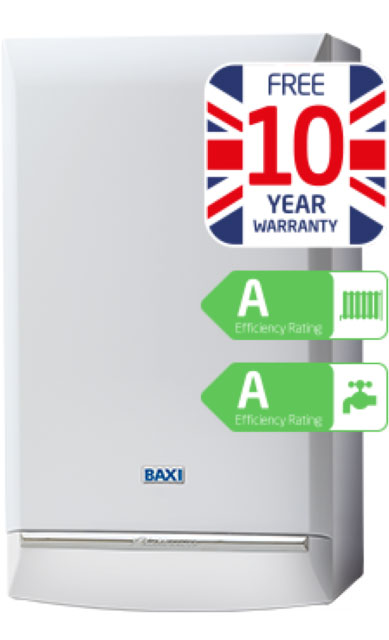 Fully Installed Baxi Boiler