
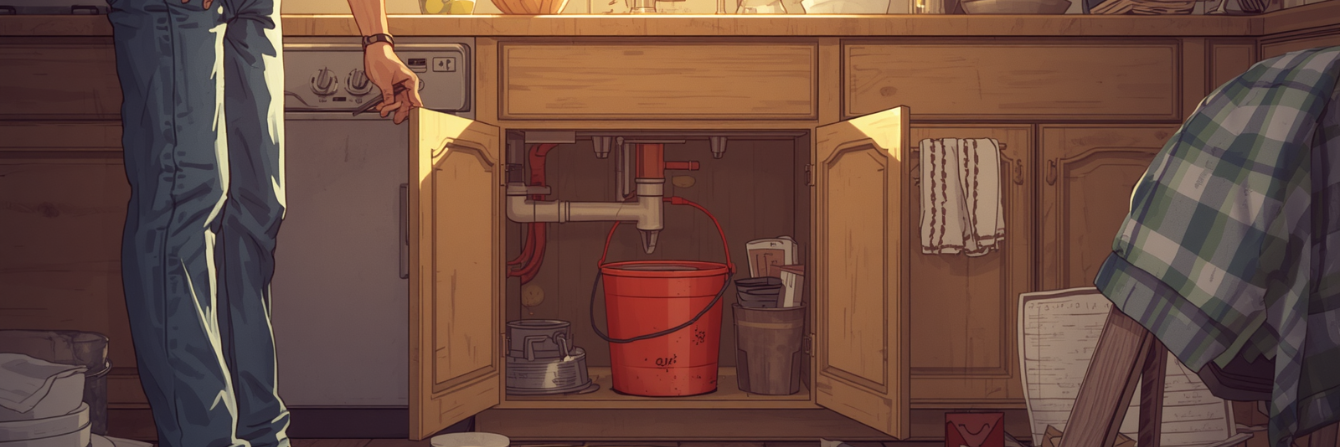
There are few things more British than noticing a leak, staring at it for a moment, saying “That doesn’t look good,” and then immediately making a cup of tea.
At first, it is just a tiny drip. Nothing dramatic. Nothing that requires panic. Certainly nothing worth cancelling your plans over.
Then you place a bowl underneath it.
Then the bowl becomes a bucket.
Then the bucket becomes “part of the room”.
And before you know it, you have developed a full emotional relationship with a plumbing problem you should probably have dealt with three weeks ago.
So, in the spirit of helping homeowners across Ripley, Belper, Alfreton and the wider Derbyshire area, here is Leeva Plumbing & Heating’s guide to the fine art of pretending a leak isn’t happening, and why it is usually better to get it sorted sooner rather than later.
Stage One: The Discovery
It usually starts with a sound.
Drip.
Drip.
Drip.
At first, you assume it is something innocent. Maybe the tap was not turned off properly. Maybe someone has just had a shower. Maybe the house is simply “settling”, which is a wonderfully vague phrase homeowners use when they do not want to investigate anything further.
Then you spot it.
A small patch on the ceiling. A damp mark near the skirting board. A mysterious puddle under the sink. A radiator valve that looks a bit too shiny.
This is the moment where action should be taken.
Instead, many homeowners choose the traditional British response: standing with hands on hips and saying, “Hmm.”
Stage Two: The Bowl Solution
The bowl is the first sign that denial has entered the building.
A bowl under a leak feels practical. It gives the illusion of control. You are no longer ignoring the problem; you are “managing” it.
Unfortunately, leaks rarely respect bowls.
Water can travel along pipes, beams and walls before appearing somewhere completely different from the source of the problem. That damp patch on the kitchen ceiling may not be directly below the leak. The actual issue could be hidden upstairs, behind a panel, under the bath or inside a wall.
So while the bowl may stop water hitting the floor, it does not stop the leak from causing damage elsewhere.
Stage Three: The Towel Era
At some point, the bowl is joined by an old towel.
This is when the leak has clearly upgraded itself from “minor inconvenience” to “household feature”.
The towel may be carefully folded. It may be changed daily. It may become a permanent resident of the bathroom, kitchen or airing cupboard.
But here is the problem: towels hide the evidence. They soak up the visible water, but they do not deal with the cause. Damp areas can lead to swollen wood, damaged flooring, peeling paint, mould growth and unpleasant smells.
A leak does not need to be dramatic to be damaging. Even a slow drip can cause expensive problems over time.
Stage Four: The “It’s Probably Fine” Speech
This is where homeowners begin negotiating with the leak.
Common phrases include:
“It’s only a little one.”
“It seems to have stopped now.”
“It only happens when we use the shower.”
“It’s been like that for ages.”
“We’ll keep an eye on it.”
Sadly, leaks are not usually known for self-improvement. If water is escaping where it should not be, something has failed, loosened, cracked, corroded or blocked.
The longer it is left, the more chance there is of the problem spreading.
A small repair today can become a much bigger repair later, especially if water gets into floors, ceilings, units, plasterboard or electrics.
Stage Five: The Decorative Damp Patch
Every British home has its quirks.
A creaky stair. A radiator that needs bleeding. A door that only closes if you lift it slightly and whisper encouragement.
But a damp patch should not be accepted as part of the character of the property.
Damp patches can indicate leaks from pipes, baths, showers, toilets, radiators, boilers or waste systems. They can also be caused by poor seals, failed grout, loose fittings or hidden pipework issues.
If the patch changes shape, gets darker, feels soft, smells musty or appears after using water elsewhere in the house, it is worth getting checked.
Common Leaks Homeowners Try to Ignore
Some leaks are obvious. Others are sneaky.
Here are a few of the usual suspects:
Under-Sink Leaks
These often start as a small puddle in the cupboard. You may only notice when you reach for the cleaning products and find everything slightly soggy.
Common causes include loose fittings, worn washers, damaged pipework or problems with the waste trap.
Toilet Leaks
A leaking toilet can waste water, damage flooring and create unpleasant smells. Sometimes it is obvious around the base. Other times, water may be constantly trickling into the pan.
If your toilet sounds like it is quietly refilling itself when nobody has used it, it may need attention.
Shower and Bath Leaks
These can be tricky because the water may only appear when the shower or bath is in use. Failed silicone, cracked grout, loose waste fittings or hidden pipework can all be to blame.
A wet patch on the ceiling below a bathroom is never something to shrug at.
Radiator Leaks
A little drip from a radiator valve may not look serious, but it can affect your heating system pressure and leave stains or damage on flooring.
If your boiler pressure keeps dropping, a leak somewhere in the heating system could be the reason.
Boiler Leaks
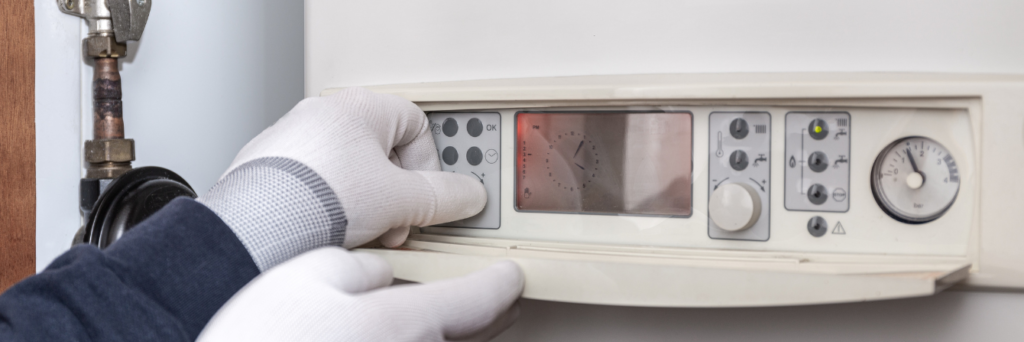
A leaking boiler should always be taken seriously. It could be linked to pressure issues, worn components, corrosion or internal faults.
If you notice water around your boiler, do not ignore it. Get it checked by a qualified heating engineer.
Why Leaks Get Worse When Ignored
Water is persistent. It does not need permission, and it does not care about your weekend plans.
A small leak can lead to:
- Damaged plaster and paint
- Rotten timber
- Mould and mildew
- Stained ceilings
- Swollen flooring
- Damaged kitchen or bathroom units
- Reduced boiler pressure
- Higher water bills
- Electrical risks if water reaches wiring
- More expensive repairs later
The frustrating thing is that many leaks are much easier to fix when they are caught early.
The longer they are ignored, the more likely you are dealing with damage as well as the original plumbing issue.
The Sensible Thing to Do When You Spot a Leak
First, try to reduce the immediate risk.
If water is actively leaking, turn off the water supply if you can do so safely. Most homes have a stop tap, often under the kitchen sink, in a utility area, downstairs toilet, cupboard or near where the water supply enters the property.
Then move anything valuable away from the leak, place a container under drips if needed, and avoid using the affected fixture until it has been checked.
If the leak is near electrics, be cautious and do not touch wet switches, sockets or appliances.
After that, call a professional plumber.
Yes, the bowl and towel may feel like a solution. But they are only buying time.
When to Call a Plumber
You should call a plumber if:
- The leak keeps coming back
- You cannot find where the water is coming from
- There is water near your boiler
- Your boiler pressure keeps dropping
- You notice damp patches on walls or ceilings
- There is water around a toilet, bath, sink or radiator
- Flooring feels soft, swollen or damp
- You can smell mustiness or see mould
- The leak is getting worse
Even if it turns out to be a small issue, that is much better than waiting until it becomes a big one.
Leeva Plumbing & Heating Can Help
At Leeva Plumbing & Heating, we help homeowners across Ripley, Belper, Alfreton and the surrounding Derbyshire areas with plumbing repairs, leak investigations, boiler repairs, boiler servicing, boiler maintenance, new boilers and bathroom installations.
Whether you have a mysterious drip, a damp patch that has started to look suspicious, a boiler that is losing pressure or a leak you have been bravely ignoring for far too long, we can help get it sorted properly.
Because while pretending a leak is not happening is a proud British tradition, fixing it early is usually much cheaper, calmer and better for your home.
And Finally…
A leak rarely fixes itself.
It may pause. It may hide. It may wait until you have guests, a busy week or freshly painted walls.
But if water is appearing somewhere it should not, your home is trying to tell you something.
And sadly, it is not saying, “Put another towel down and hope for the best.”
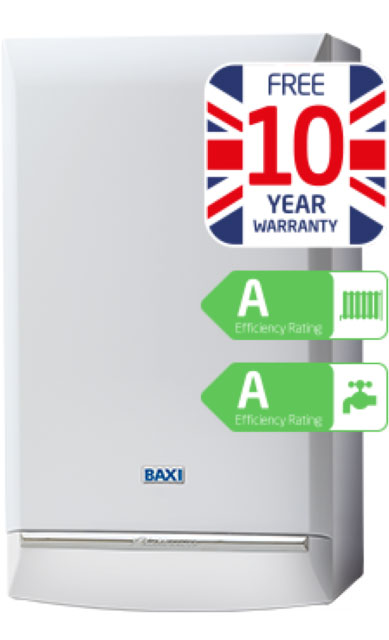 Fully Installed Baxi Boiler